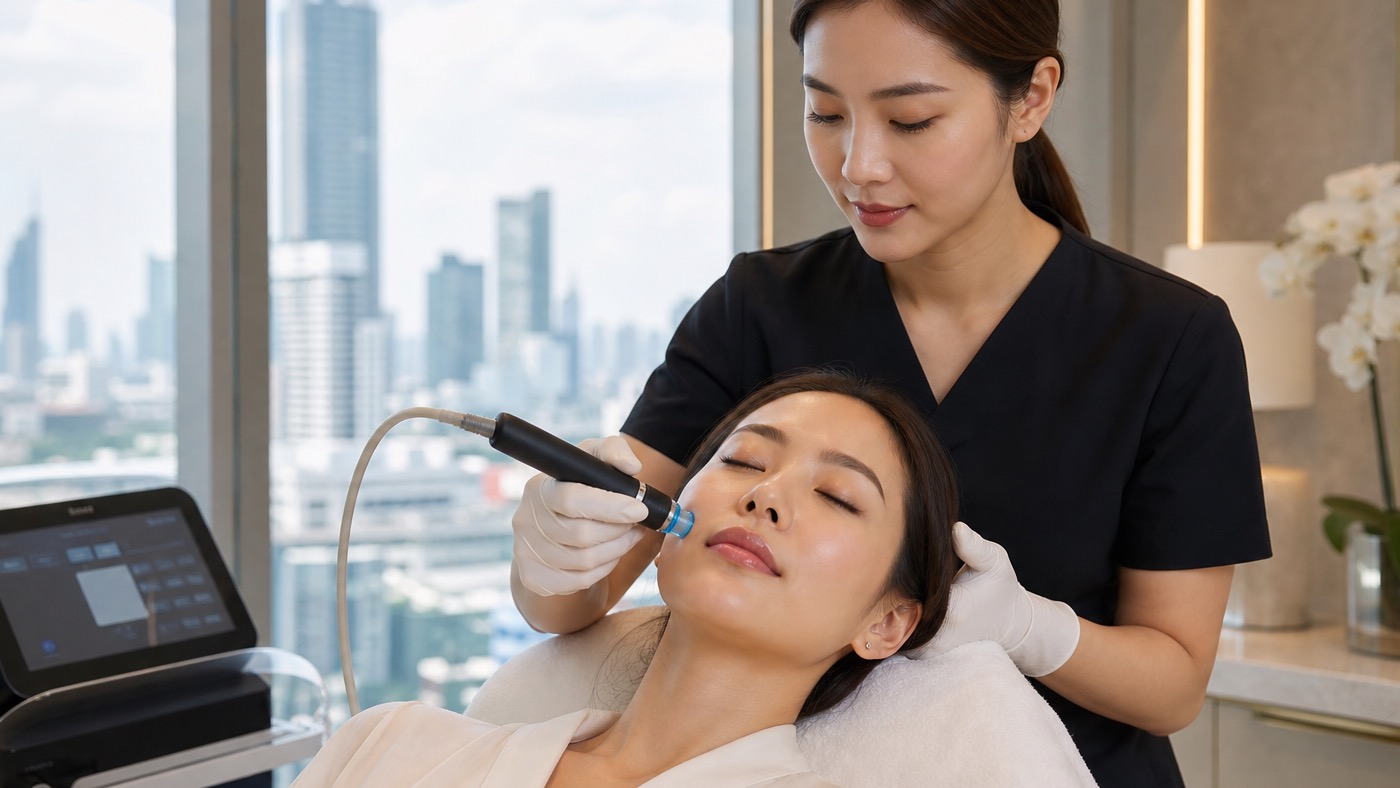
Long-haul travel can be hard on the skin, especially when the journey ends in Bangkok. Hours of low cabin humidity, limited sleep, repeated face touching, sunscreen residue, airport pollution, and a fast shift into tropical heat can leave the complexion looking flat. Some people land with tight cheeks and a greasy T-zone. Others notice rough texture, makeup that stops sitting evenly, or pores that look more obvious after travel. That does not automatically mean the skin needs an aggressive treatment, but it does mean the routine should become simpler and more intentional.
Hydrafacial can fit into that reset when used in a practical, conservative way. It should not be framed as a cure for acne, dehydration, sensitivity, pigmentation, or any diagnosed skin condition. A better description is that it can help refresh travel-tired skin through cleansing, gentle exfoliation, controlled extraction where appropriate, hydration infusion, and calm aftercare. For people arriving in Thailand, that structure can be more useful than guessing with several new products at once.
What a Long-Haul Flight Can Do to the Skin
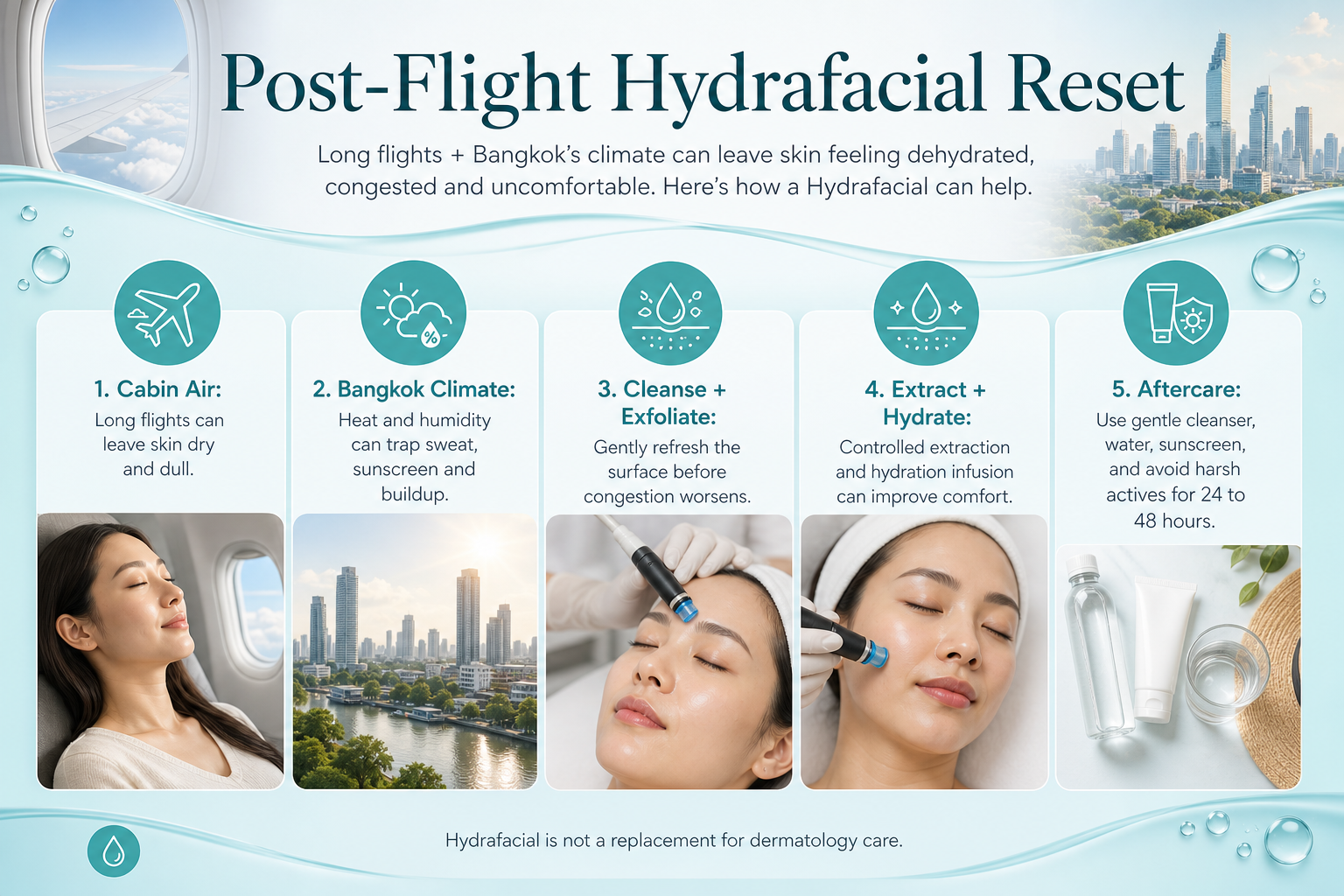
Cabin air is dry, sleep is often fragmented, and water intake is usually lower than ideal. During a long flight, the skin can lose comfort even when it still looks shiny. That is because surface oil and true hydration are not the same thing. By the time you land, the skin may feel tight around the cheeks, rough around the mouth, and heavy around the nose or forehead where sweat, sunscreen, and travel buildup have been sitting for hours.
Travel also changes behavior. People cleanse at unusual times, wipe the face more often, apply richer products mid-flight, or skip their normal routine completely. That disruption can leave the skin looking dull rather than refreshed when they arrive. The goal after landing is not to strip everything away. It is to remove residue carefully, restore comfort, and help the skin settle.
Why Arriving in Bangkok Can Make It Feel Worse
Bangkok can amplify travel stress because the environment shifts so quickly. You move from conditioned airport air to humidity, traffic, heat, sun exposure, and then back into strong air-conditioning in a hotel, clinic, office, or car. That cycle can make the face feel oily by midday but tight again by evening. If you are also wearing sunscreen repeatedly or spending time outdoors after arrival, the skin can start to feel coated rather than balanced.
This is why post-flight skincare in Thailand needs context. A person landing in cool weather elsewhere may only need hydration, while a person landing in Bangkok may need both removal of buildup and replenishment of moisture. Hydrafacial can be useful in that in-between zone because the session is not only about exfoliation. When done thoughtfully, it combines refreshment and hydration in one appointment without automatically pushing the skin into a harsh recovery cycle.
Common Signs of Travel-Tired Skin
Travel-tired skin often shows up as a mix of concerns rather than one single issue. The complexion may look flatter than usual, pores may seem more visible, and the skin can feel both dry and greasy. Clients sometimes describe this as a dirty or suffocated feeling even after washing the face. Others notice that concealer or tinted sunscreen starts clinging to rough patches while the T-zone still becomes shiny a few hours later.
These signs do not automatically mean you need treatment immediately. They are clues that the skin barrier and surface condition may be out of balance. If the face feels stinging, looks unusually red, or has become irritated from sun, retinoids, or active breakouts, a gentler plan may be better. The first useful step is to identify whether the skin mainly needs calming, cleanup, hydration, or time.
Where Hydrafacial Fits After Travel
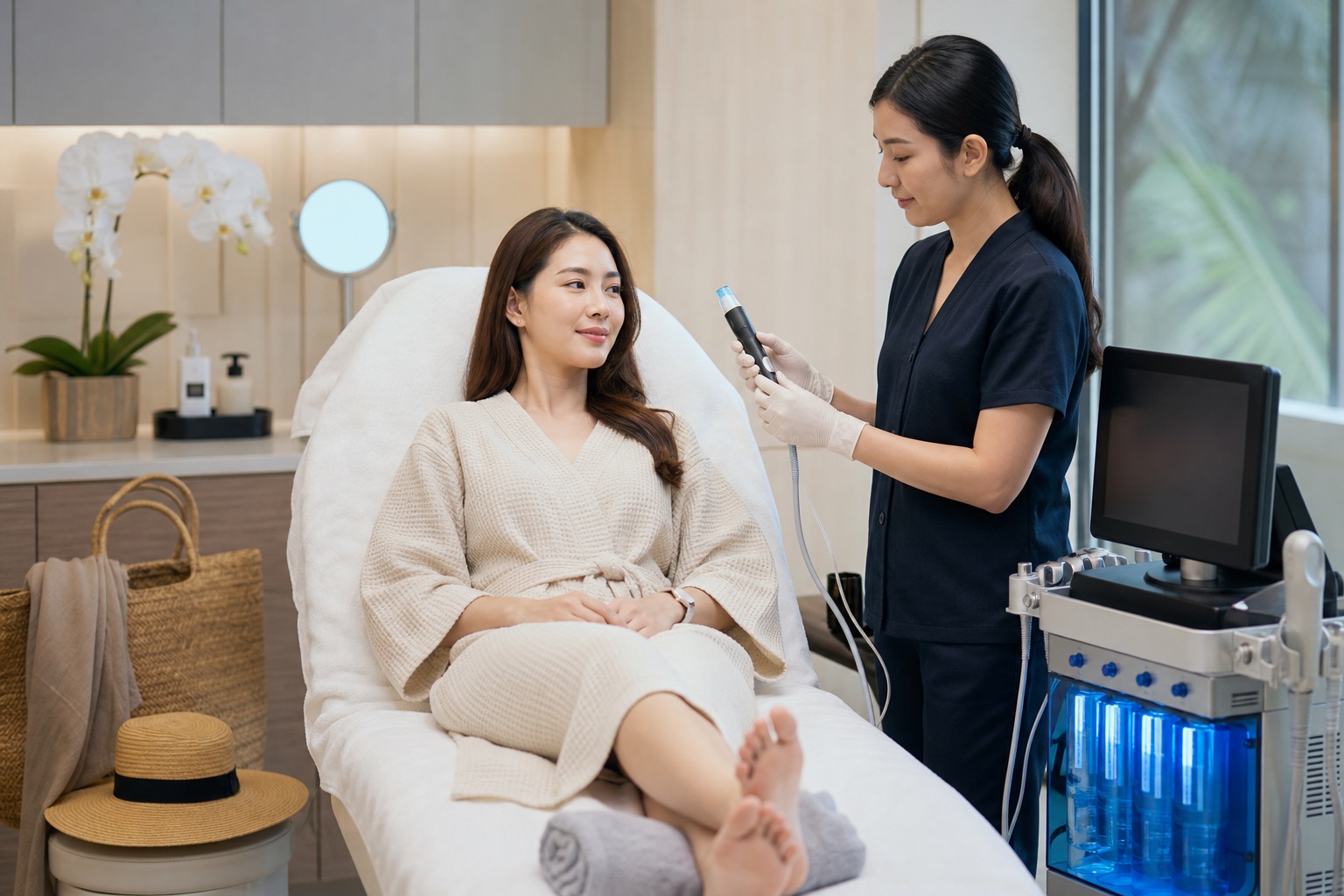
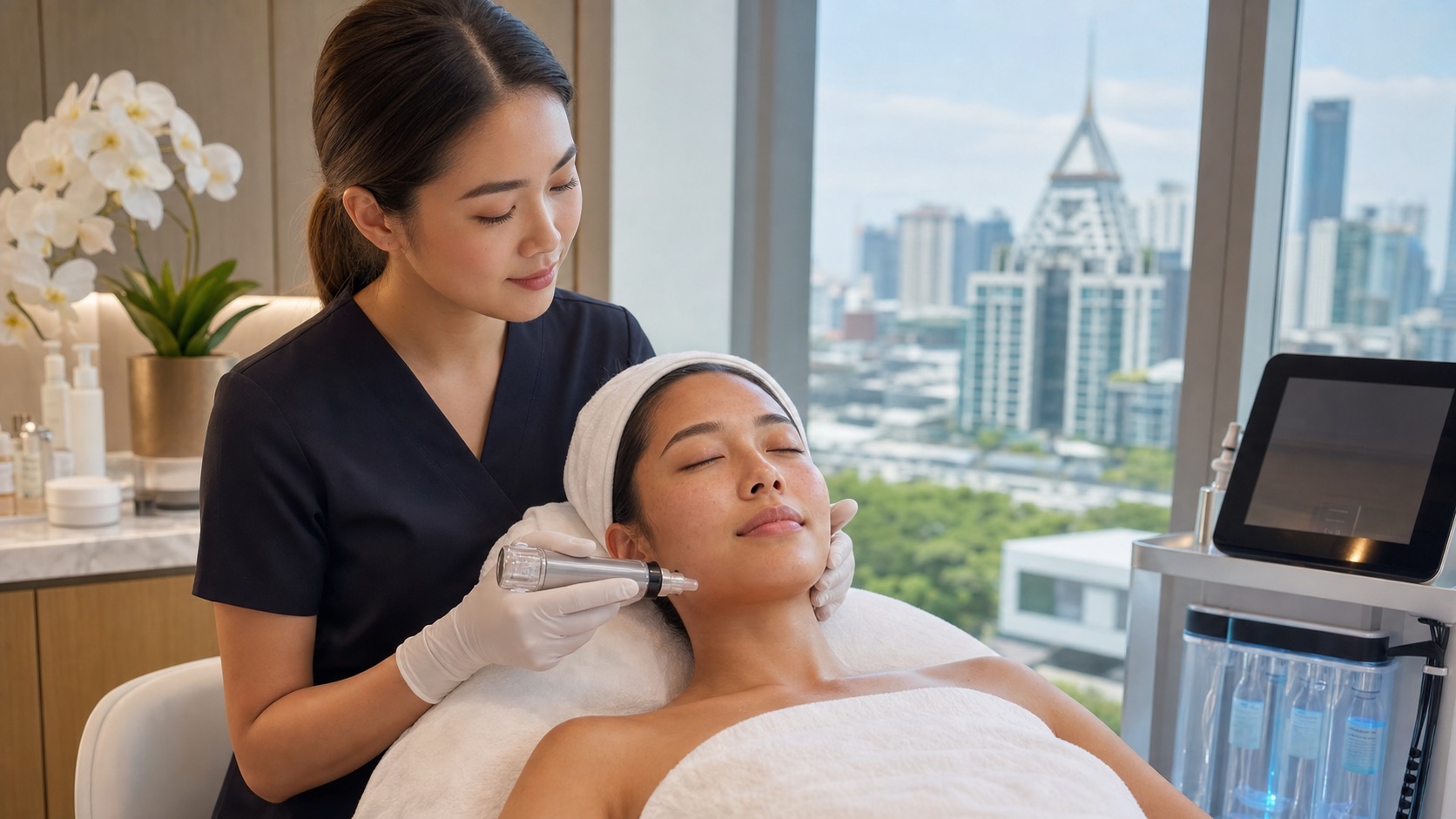
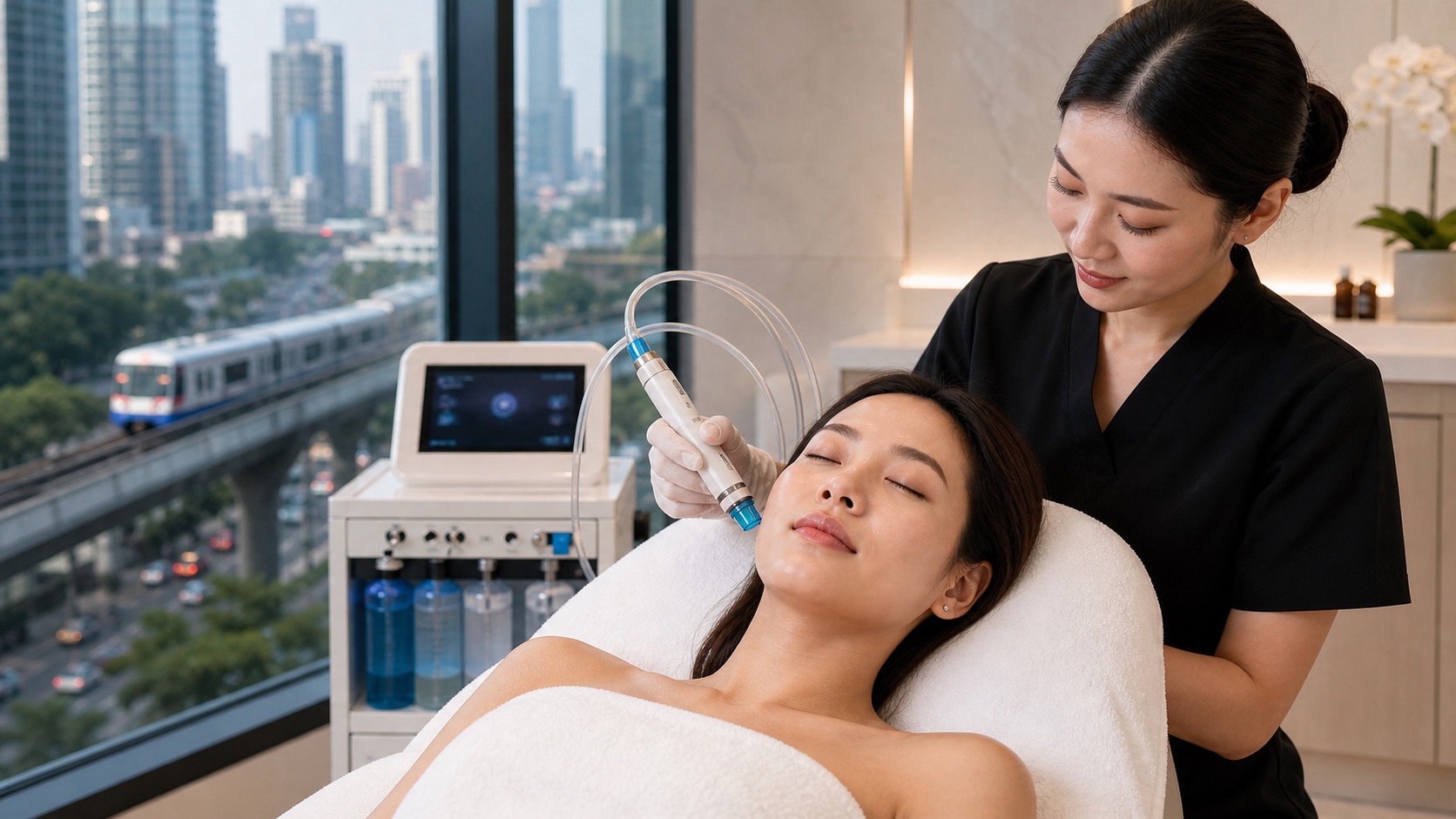
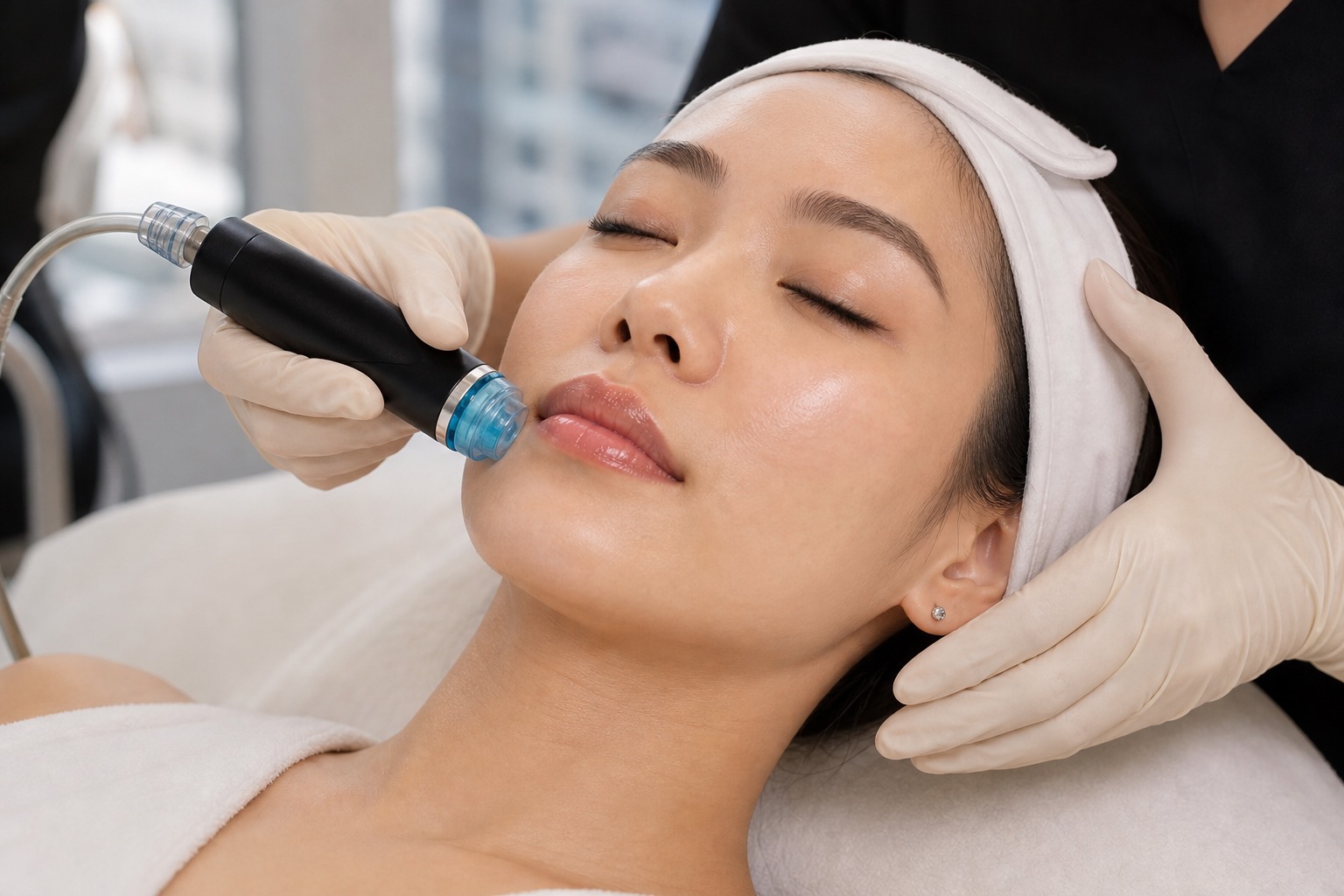
Hydrafacial fits best as a structured reset, not as an emergency fix before every dinner or event. Its value after a long-haul flight is that it follows a clear logic. First, the skin is cleansed and gently resurfaced. Next, congested areas can receive controlled extraction if the provider thinks that is appropriate. Finally, hydrating and conditioning solutions are infused to help the skin feel more comfortable. That sequence makes sense for post-flight skin because travel stress is usually a combination of buildup and dehydration rather than one problem alone.
It is still important to stay medically conservative. Hydrafacial is not a substitute for dermatology care and should not be promoted as preventing acne, fixing rosacea, or correcting an inflamed skin flare. The realistic benefit is that it may help the skin look fresher, feel cleaner, and sit better under sunscreen and makeup once the immediate travel residue has been cleared away.
How Cleansing and Gentle Exfoliation Help
The cleansing and gentle exfoliation stage is often the most satisfying part for recent travelers because it addresses the heavy feeling that builds up from flights, transfers, pollution, and repeated product layers. After a long journey, skin can carry old sunscreen, sweat, makeup, and dead surface cells all at once. A controlled refresh can help the face feel lighter without the roughness that often follows aggressive scrubbing.
This matters in Bangkok because many travelers arrive and immediately spend time outdoors. If the skin already feels overloaded, stronger home exfoliants can make it more temperamental. A clinic treatment should therefore aim for measured resurfacing rather than intensity. The skin should feel clearer afterward, not raw.
How Controlled Extraction Can Help Without Overworking the Skin
Flights do not usually create new congestion instantly, but they can make existing buildup more obvious. Areas such as the nose, chin, and central forehead may look rougher after hours of travel, especially when sweat and sunscreen have mixed together in a humid city. Controlled extraction can help address those zones in a more structured way than squeezing the skin at home or layering more acids onto an already stressed face.
The key word is controlled. Extraction should be guided by the skin in front of the provider, not by a fixed idea that every post-flight client needs deep pore work. If the skin looks sensitive, depleted, or sun-stressed, the session may need a lighter touch. Good post-travel treatment planning respects the barrier first and treats congestion second.
Why Hydration Infusion Matters After Flights
The hydration stage is what makes Hydrafacial especially relevant after air travel. A person can arrive in Bangkok with enough surface oil to feel greasy and still lack real comfort in the skin. That is because cabin air, poor sleep, and repeated cleansing can disturb the balance that helps the face feel smooth and resilient. Hydration infusion can support that comfort after the cleansing and extraction stages so the final result feels refreshed instead of stripped.
For travelers, this stage often makes the difference between skin that merely looks cleaner and skin that looks more settled. It can also help the face accept a simpler aftercare routine, with less temptation to over-correct using masks, peels, scrubs, or several new products.
Best Timing After Landing in Thailand
Timing matters more than many visitors expect. If you have just stepped off an overnight flight and your skin feels hot, irritated, or visibly swollen from travel, there is no prize for booking immediately. It is often wiser to sleep, drink water, cleanse gently, and let the skin settle before deciding on treatment. For many people, later the same day or the next day is more sensible than rushing straight from the airport into a procedure room.
If you are in Bangkok for an event or photos, build in breathing space. Hydrafacial is commonly described as low downtime, but temporary redness can still happen. A practical rule is to leave enough time before an important commitment so the skin can look rested rather than hurried.
What to Tell Your Provider Before Treatment
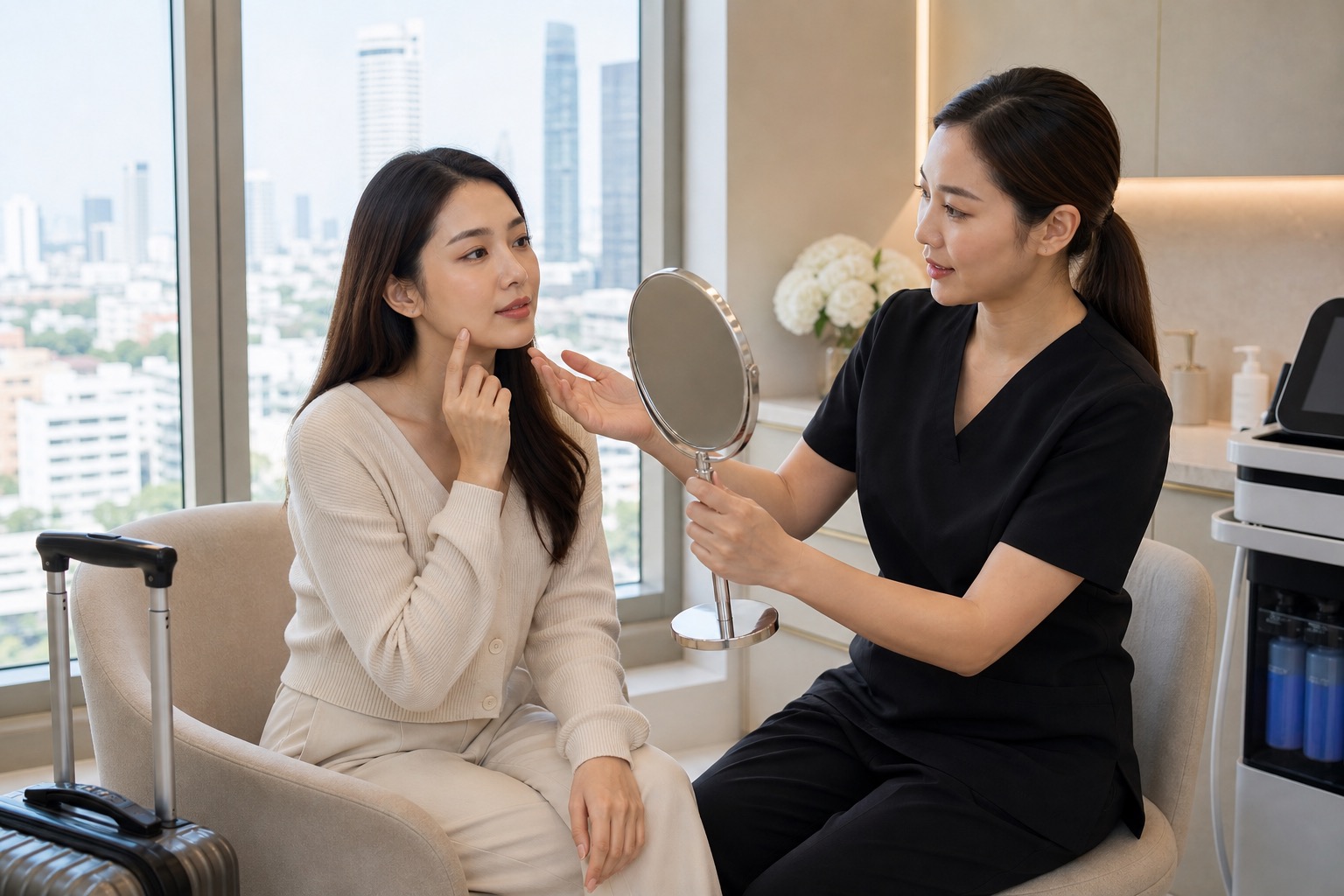
A short consultation becomes more important after travel because the provider needs to know what the skin has already been through. Mention long sun exposure, recent retinoid use, strong acids, prescription acne medication, waxing, peels, laser work, or unusual irritation during the trip. Also mention if you are dehydrated, sleep-deprived, or dealing with breakouts that feel inflamed rather than just congested.
This information helps the provider decide whether the session should focus more on comfort, congestion, hydration, or timing. It also helps prevent over-treatment. In Bangkok, the most professional approach is usually the one that edits the treatment to match the skin, not the one that tries to do everything at full intensity.
Aftercare for Bangkok Heat and Hotel Air-Conditioning
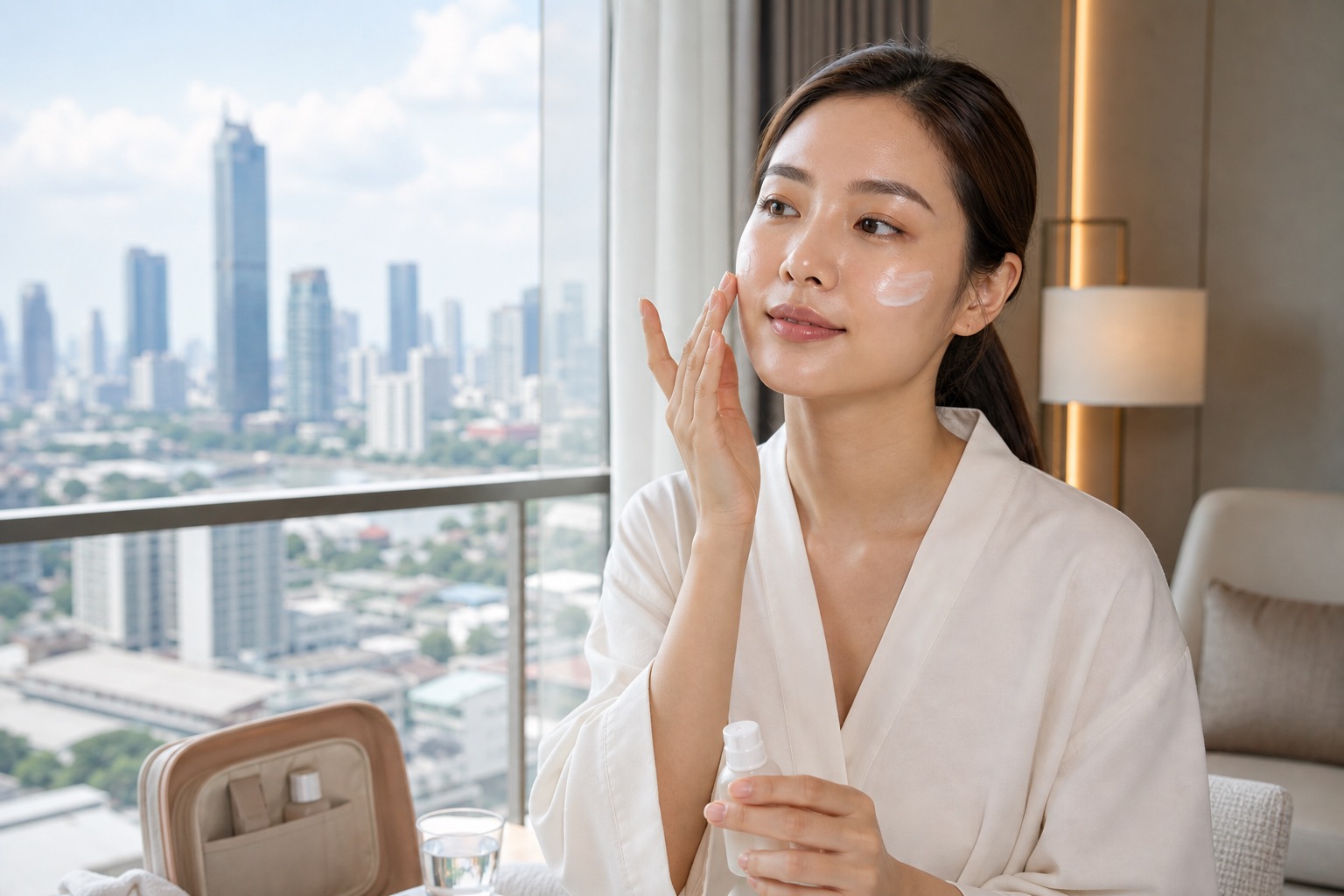
After treatment, keep the routine calm. Use a gentle cleanser, drink water normally, apply sunscreen carefully, and avoid piling on strong actives for the period recommended by your provider. In Bangkok, the combination of outdoor heat and indoor air-conditioning can tempt people to keep washing the face or layering rich creams. Both can be unhelpful. The skin usually does better with light, consistent care than with dramatic correction.
This is also the stage where travel habits matter. If you are moving between meetings, shopping, or outdoor transport, reapply sunscreen but avoid constant rubbing and wiping. If the skin feels warm or slightly flushed, skip aggressive masks, saunas, and heavy exfoliants. Aftercare is part of what allows the refreshed result to hold together for the rest of the trip.
When to Wait and Ask for More Specific Advice
Not every post-flight face is ready for treatment on the same day. If you have a sunburn, an active rash, severe inflammatory acne, open skin, or a strong reaction to products used during travel, it may be better to postpone and speak with a qualified provider first. The same caution applies if you are already under dermatology care or using medication that significantly changes skin sensitivity.
Waiting is not a failure. It is part of good planning. A reputable clinic should be comfortable recommending a lighter session, a later appointment, or a different form of care when the skin barrier clearly needs rest first. The most reliable results in Bangkok usually come from respecting what the skin can tolerate on that specific day.
Building a Practical Post-Flight Skin Plan
The strongest post-flight strategy is usually simple: cleanse gently, protect with sunscreen, stay realistic about timing, and use professional treatment with a clear reason. Hydrafacial can make sense when the skin feels coated, rough, dull, or uncomfortable after travel and when a provider can tailor the session to that condition. It is less useful when booked reflexively without regard to sun exposure or irritation.
For travelers arriving in Bangkok, the goal should not be perfection in one appointment. The goal is to help the skin look fresher, feel cleaner, and recover balance after cabin air, airport transfers, heat, and changing environments. Used that way, Hydrafacial can be a practical part of travel skincare rather than another rushed stop on the itinerary.