A Thailand beach holiday sounds relaxing, but it can be surprisingly demanding on the skin. A few days in Phuket, Samui, Krabi, Pattaya, or Hua Hin often mean repeated sunscreen application, long hours in heat, salt water, hotel air-conditioning, evening makeup, and travel back to Bangkok with tired skin. By the end of the trip, many people return with dullness, rough texture, clogged pores, dehydration, and the sense that their normal routine is no longer enough.
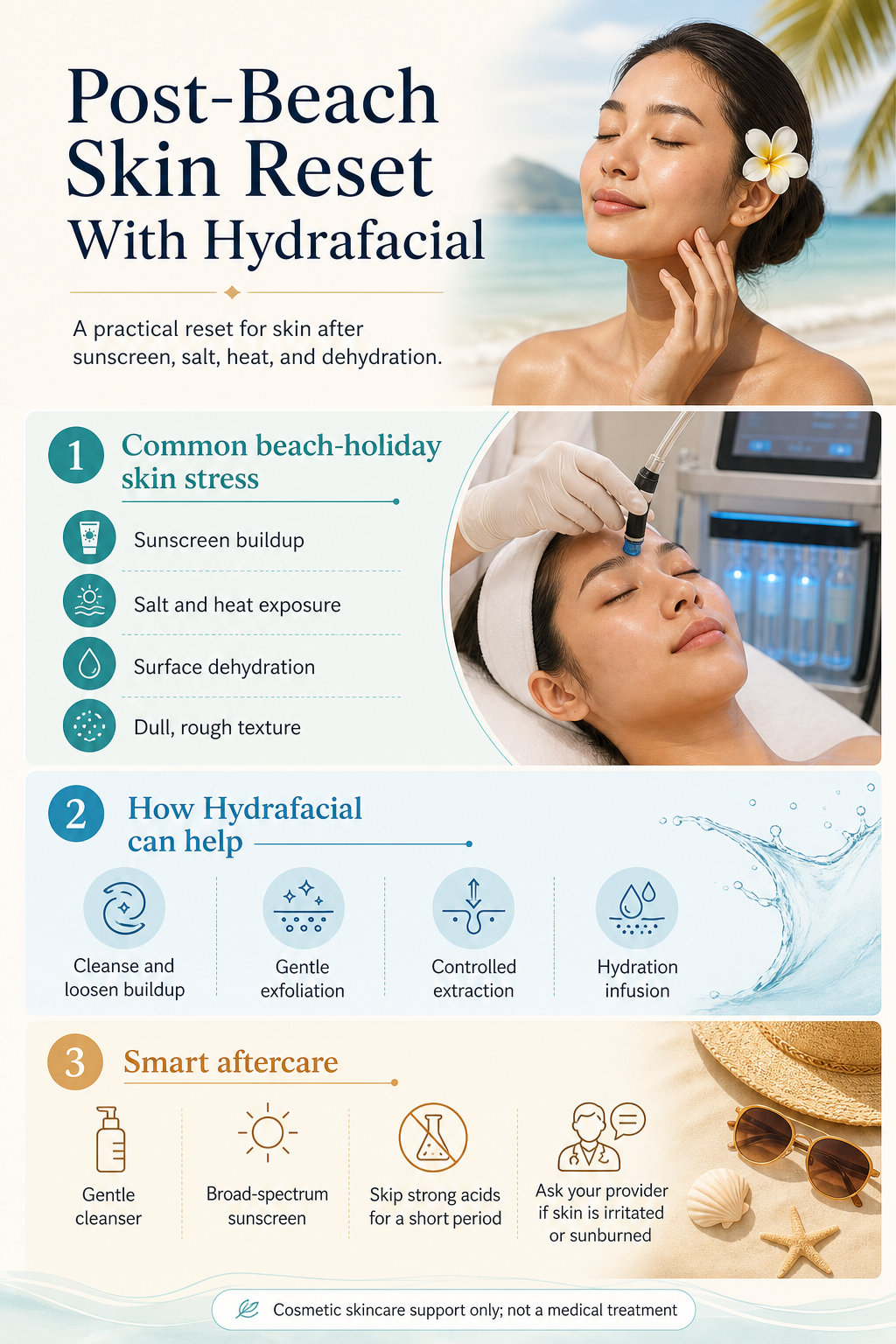
That does not mean the skin needs aggressive correction. Post-holiday skin is often overloaded rather than damaged in one simple way. There may be sunscreen residue on the surface, salt and sweat affecting comfort, and too much cleansing or sun exposure making the skin barrier feel unsettled. In that context, a Hydrafacial can fit as a structured reset. It combines cleansing, gentle exfoliation, controlled extraction, hydration infusion, and aftercare guidance in one appointment. It should not be described as a cure for sun damage, acne, pigmentation, or every beach-related concern. A more accurate description is a practical cosmetic treatment that may help the skin feel cleaner, more comfortable, and better balanced after a Thailand beach trip.
Why beach holidays stress the skin more than expected
Holiday skin stress is rarely about one trigger. The beach exposes the skin to UV, heat, wind, sand, sea water, sweat, and frequent product layering. Even disciplined sunscreen use can leave the face carrying more residue than usual because most people reapply several times a day. Add makeup for dinners, cleansing in a hurry, and inconsistent sleep, and the skin often finishes the trip carrying far more than people realize.
The sunscreen, salt, and heat combination
Sunscreen is essential in Thailand, but heavy use changes the way the skin feels. Multiple layers of SPF, water resistance, sweat, and travel dust from the return to Bangkok can build up on the surface. That does not make sunscreen the problem. It simply means the skin may need a more thorough but still respectful cleanse after several beach days. Salt water and heat add another layer. For some people, they leave the surface feeling drier or tighter later in the day, even while oiliness increases. That is why post-beach skin can look glossy yet still feel thirsty.
Why skin can feel both congested and dehydrated
Congestion and dehydration often appear together after beach travel. Oil, sunscreen, makeup, and environmental residue can sit on the skin long enough to make pores look blocked, especially around the nose, chin, and central forehead. At the same time, sun exposure, wind, travel fatigue, and indoor cooling can make the skin barrier feel less comfortable. This is common for people who land back in Bangkok after a coastal trip and suddenly feel that their face is both heavy and tight.
That combination can push people toward over-correction. They scrub, use several acids at once, or restart strong actives immediately because the skin feels coated. Sometimes that removes residue, but it can also leave the face more reactive. A better strategy is to reduce buildup while still protecting comfort. Hydrafacial can be relevant here because the treatment logic is not only about exfoliation. It also includes hydration support after cleansing and extraction, which matters when the skin is tired rather than simply oily.
When a Hydrafacial fits post-holiday recovery
A Hydrafacial fits best when the skin feels overloaded by the trip and needs a measured reset, not when it is actively injured. It may make sense for dullness, rough texture, visible congestion, a coated feeling after repeated sunscreen use, or skin that no longer feels smooth or balanced after beach exposure. It can also be practical before returning fully to a city routine in Bangkok, especially if the goal is to help the skin feel fresher without planning around major downtime.
The treatment sequence in practical terms
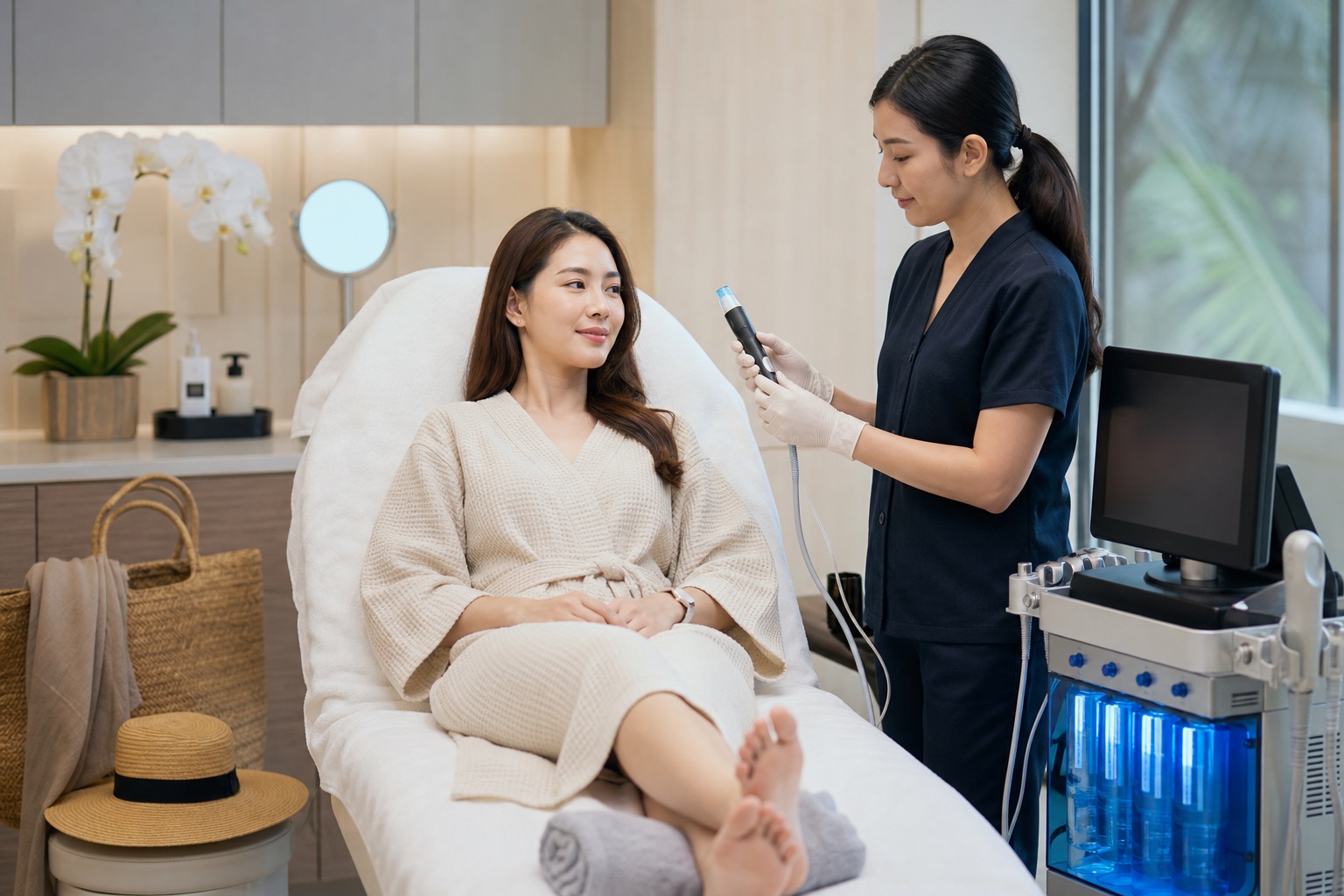
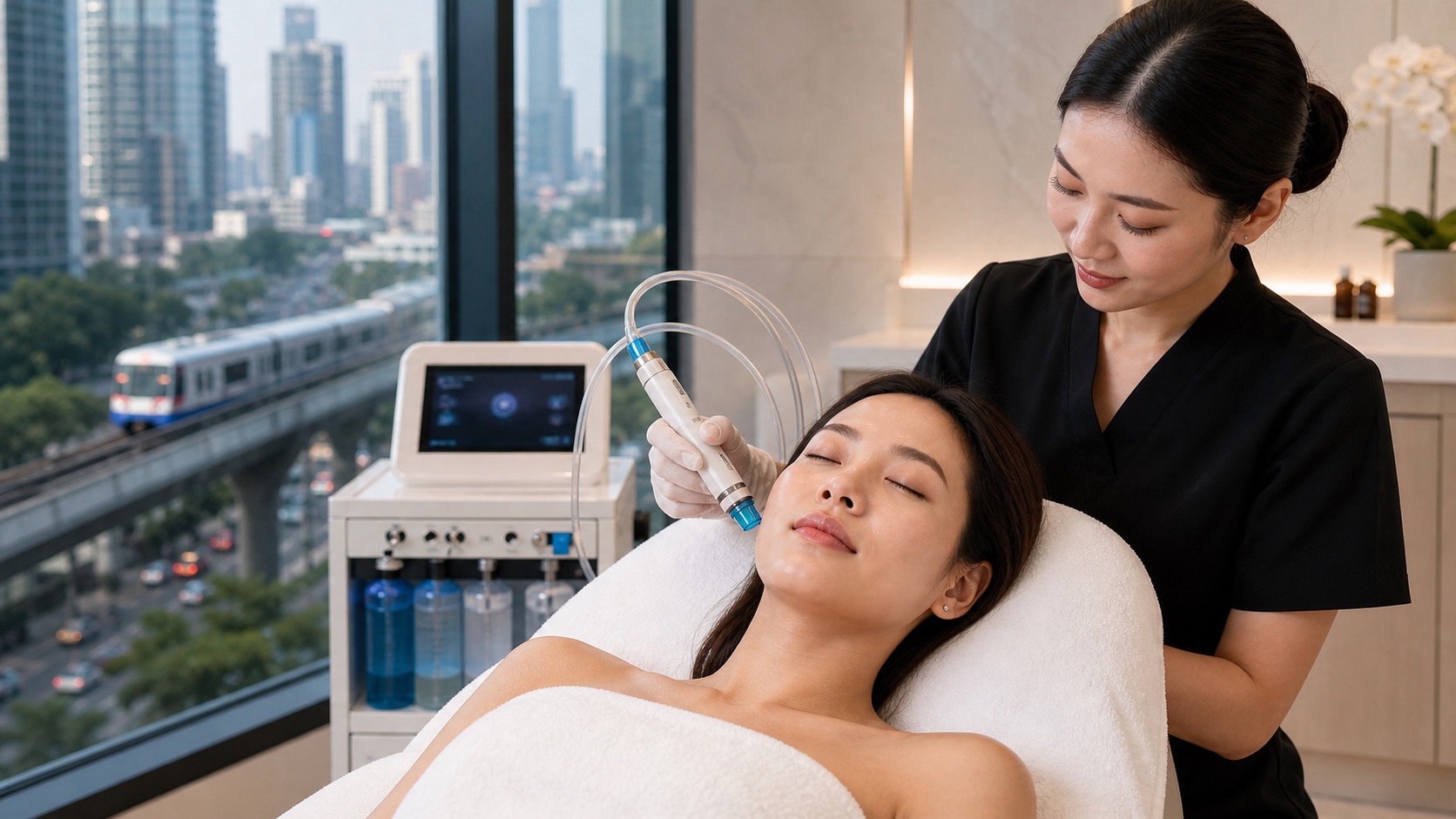
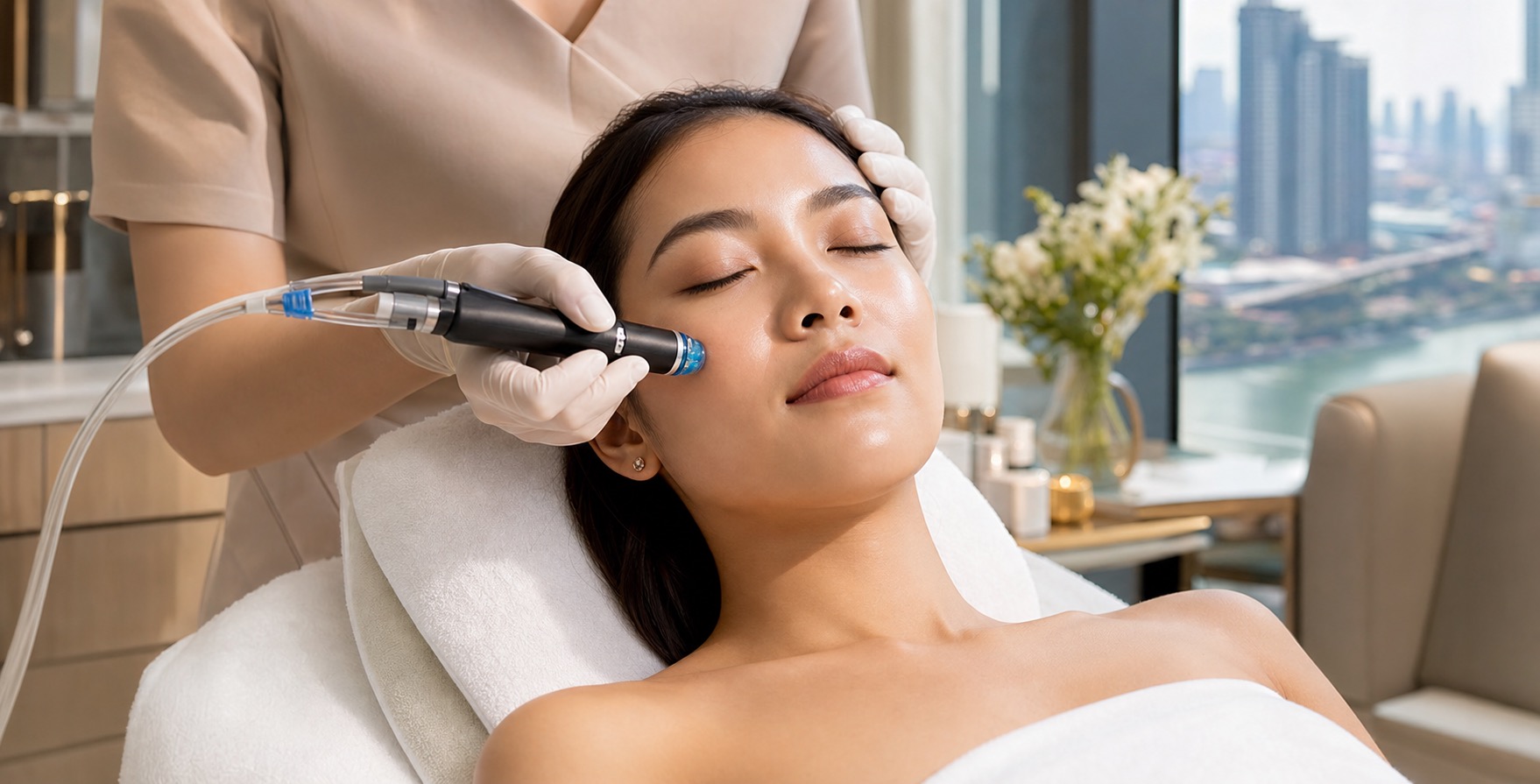
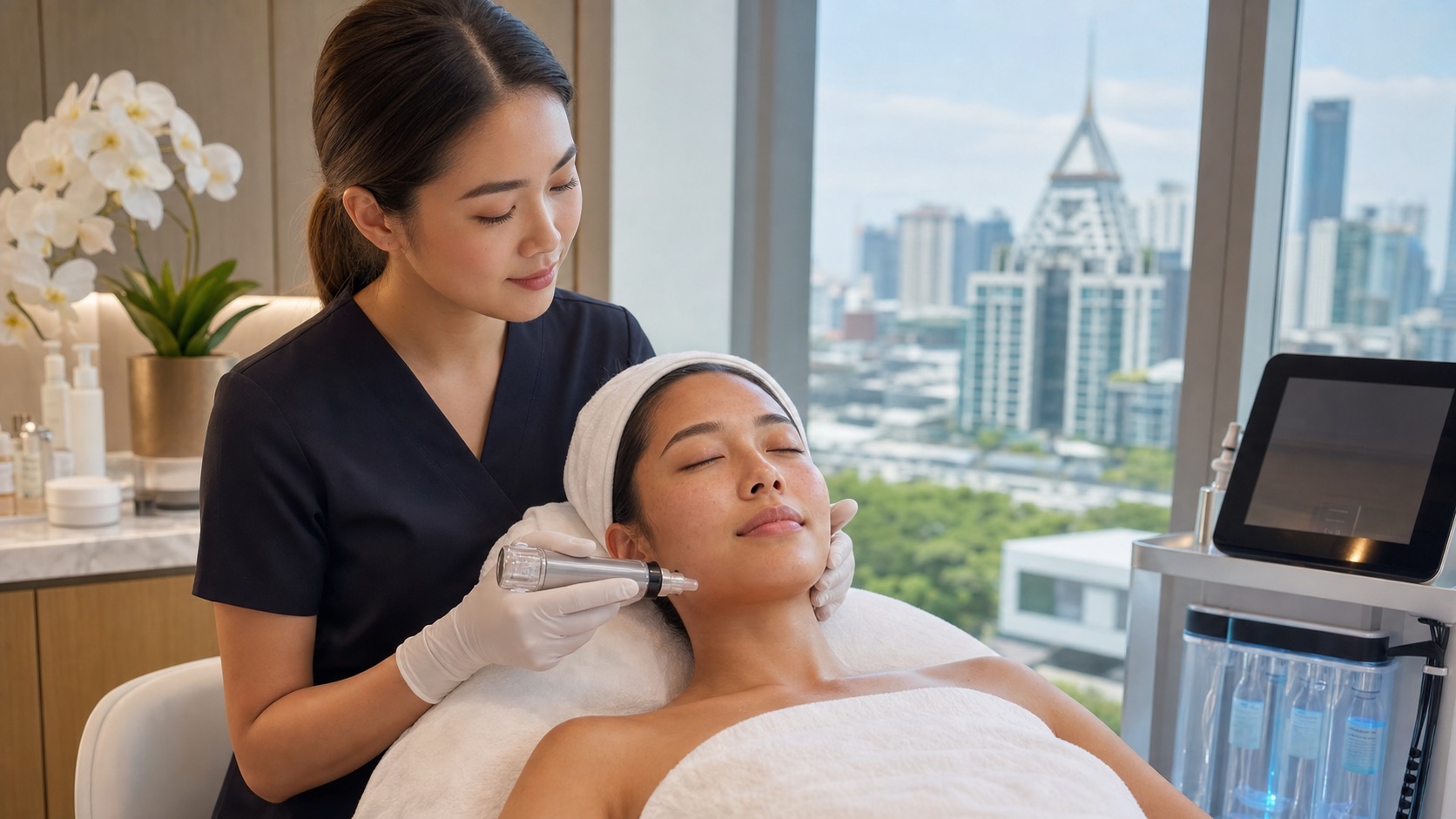
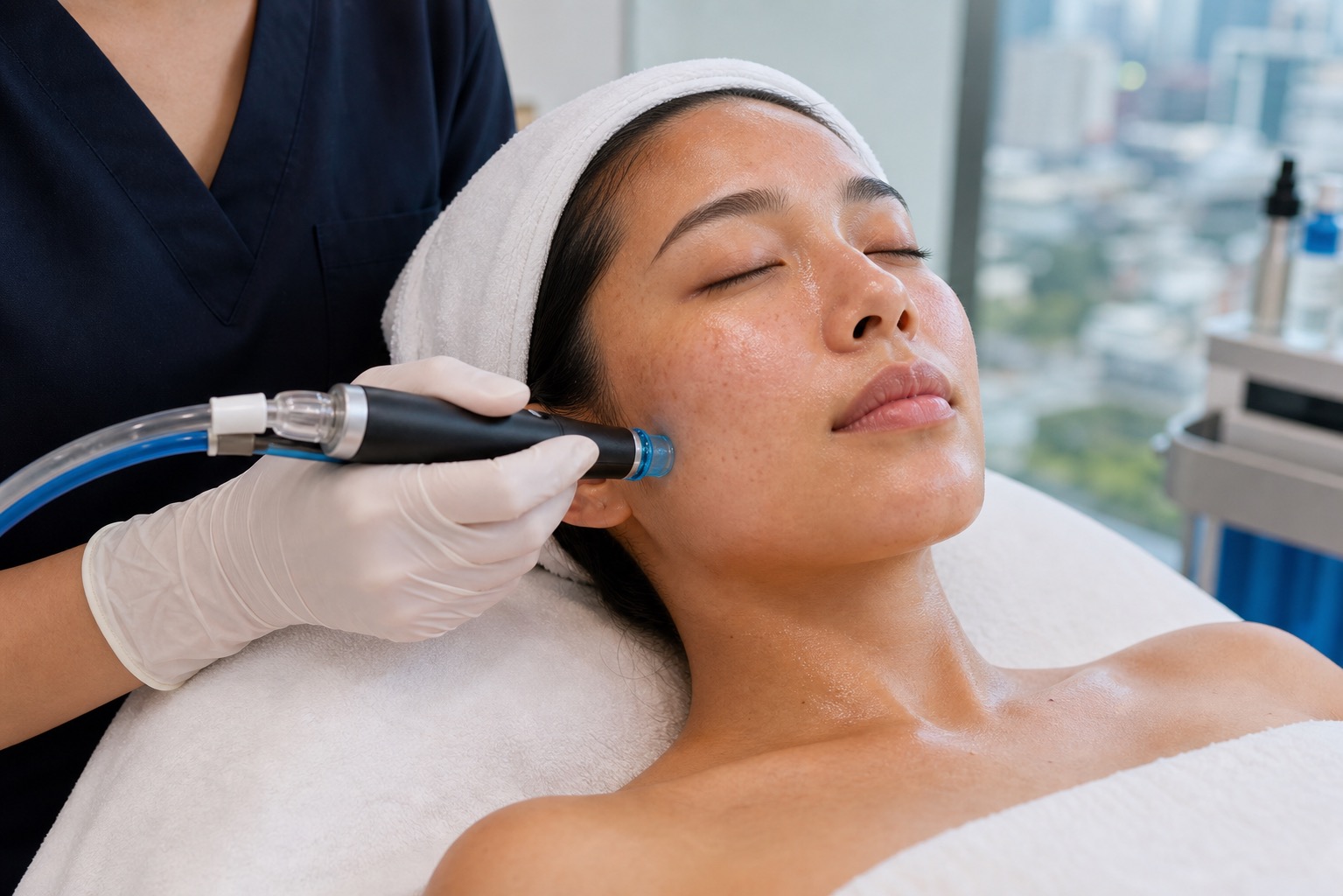
The logic of the treatment is straightforward. First, the skin is cleansed and gently resurfaced so residue and tired surface cells can be loosened. After a beach holiday, this step matters because the face may still be carrying sunscreen film, sweat, makeup, and travel buildup that ordinary washing has not fully removed. Next comes controlled extraction where appropriate, followed by hydration infusion and calming support. That sequence matters because a post-holiday face often needs both clarity and comfort. The point is not to strip the skin until it feels squeaky. The point is to work through the problem in an order that makes practical sense.
What to tell the provider before treatment
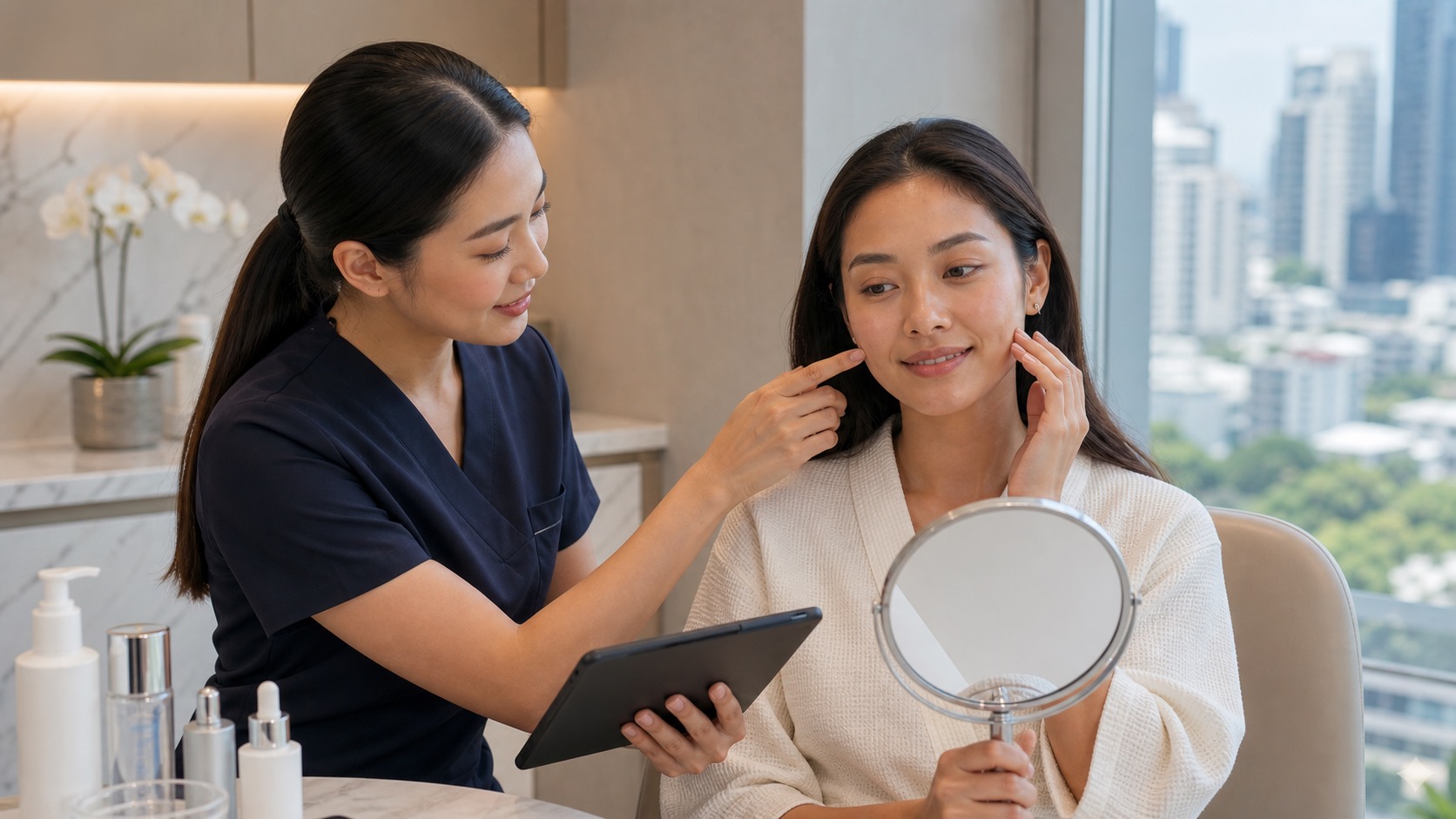
A short consultation can change the quality of the session significantly. Tell the provider if you came back with sun sensitivity, peeling, stinging, redness, or irritation around the cheeks, nose, or jawline. Mention any retinoids, exfoliating acids, acne products, prescription creams, recent laser sessions, waxing, or peels. If you were heavily sun exposed on the trip, say so clearly. That information helps determine whether the treatment should be softened, delayed, or adjusted toward hydration rather than stronger resurfacing.
It is also helpful to describe the actual trip pattern. Saying that you spent three days in Samui with repeated sunscreen reapplication, swimming, late nights, and a flight back to Bangkok gives better context than simply saying your skin feels dull. Post-holiday skin is shaped by environment and routine as much as by skin type.
How soon after a beach trip should you book?
Timing matters more than many people expect. If the skin feels calm and you did not come back sunburned, you may consider booking after you have had a little time to rest, rehydrate, and let the immediate beach exposure settle. That usually makes more sense than rushing into a treatment the same afternoon you return to Bangkok. If the face is hot, red, flaky, or uncomfortable after sun, it is usually better to wait and ask for guidance first. Hydrafacial is often described as low downtime, but low downtime should not be confused with no judgment required.
Gentle exfoliation without overcorrecting
After a beach holiday, people often want to scrub away the entire trip. That instinct is understandable but not always helpful. If the skin already feels dry, tight, or wind-exposed, aggressive resurfacing can make it feel worse even if the face also looks congested. Gentle exfoliation works better because it helps remove surface buildup and roughness without pretending the skin needs punishment. The goal is smoother texture and a more even-feeling surface, not an over-processed finish.
Controlled extraction for post-holiday congestion
Beach holidays can leave congestion in very specific zones. The nose, chin, and central forehead often collect the most residue because of SPF, sweat, and repeated touching or wiping. Controlled extraction may help those areas look cleaner without the squeezing and friction people often use at home. That matters because self-extraction after a trip is one of the easiest ways to turn a manageable clog into visible irritation.
Extraction still needs judgment. If the skin is inflamed, tender, or compromised, the provider may decide that less is more. A good session does not try to force every pore into submission. It identifies which areas can be treated comfortably and which areas should simply be supported and left alone.
Hydration infusion and barrier comfort
This is the stage that often makes the treatment feel especially relevant after sea, sun, and travel. Once buildup has been addressed, the skin may still need help feeling comfortable again. Hydration infusion is not about promising dramatic medical repair. It is about helping the surface feel less tight and more settled after cleansing and extraction. For many post-holiday clients, that comfort is just as valuable as visible clarity.
Hydration also matters because people returning to Bangkok often go straight back into air-conditioning, traffic, and regular city routines. If the treatment ends with the skin feeling stripped, the week becomes harder to manage. If it ends with the skin feeling cleaner but also supported, sunscreen and daily skincare usually sit more pleasantly afterward.
Smart aftercare once you are back in Bangkok
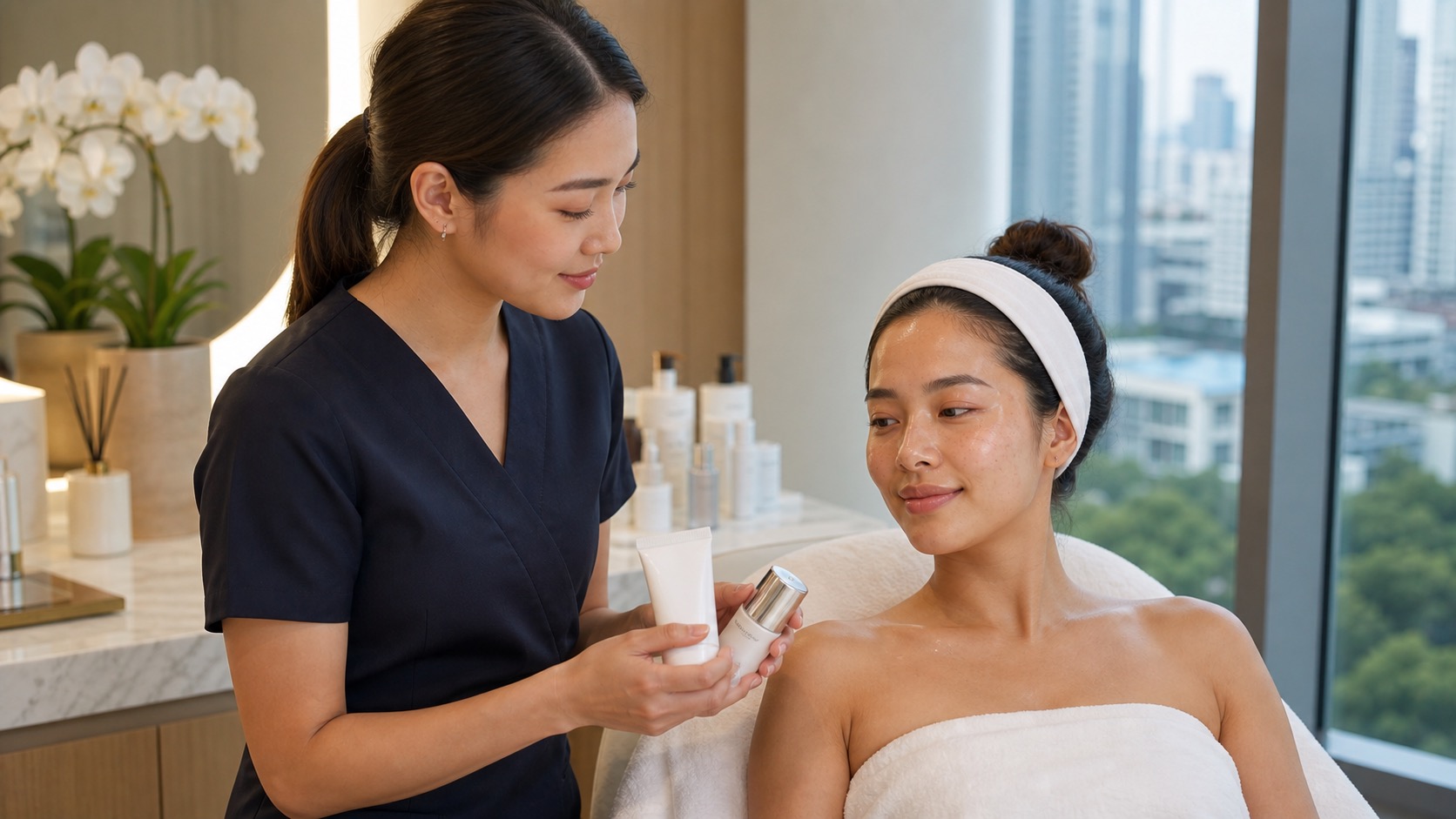
Aftercare should stay calm and uncomplicated. Use a gentle cleanser, keep hydration light but consistent, and wear broad-spectrum sunscreen even if the beach trip is over. If the provider recommends a short pause from strong acids, scrubs, or retinoids, that advice is worth following. The skin does not usually need a second wave of intensity immediately after a reset treatment.
It also helps to think about the next twenty-four to forty-eight hours realistically. Returning to Bangkok may involve commuting, office air, dining out, or exercise. Try not to pile on heavy makeup, steam, sauna, harsh cleansing tools, or unnecessary friction right away. The best-looking results often come from giving the skin a little room to settle while keeping the routine disciplined and simple.
When to postpone and ask for medical advice
Hydrafacial is not a substitute for medical assessment. If the skin is actively sunburned, blistered, unusually painful, showing signs of rash or infection, or already under dermatology treatment, it is better to pause and get appropriate guidance. The same applies if your main concern is not simple post-holiday congestion or dehydration but something more persistent such as significant inflammatory acne, melasma management, or a condition that has clearly worsened after the trip.
The practical goal is not perfection in one appointment. It is to choose a treatment that matches the skin you actually have on that day. For many people, Hydrafacial can be a sensible cosmetic reset after Thailand beach travel when the skin feels loaded with sunscreen, salt, heat, and fatigue. The session works best when it is timed conservatively, adjusted to the skin's condition, and followed by simple aftercare rather than more intensity. In that role, Hydrafacial can help many Thailand travelers and Bangkok residents return from the beach with skin that feels fresher, clearer, and more comfortable, without making bigger promises than the treatment should carry.