Why Thailand’s hot season changes the way skin behaves
In Thailand, the hot season is more than just uncomfortable weather. For many people in Bangkok and other cities, it is the time when skin starts to feel tighter, look duller, and break out more easily. Heat, sweat, UV exposure, dust, and long hours in air-conditioned spaces can all disrupt the skin barrier and make the face look less fresh by the end of the day.
That is why many people search for Hydrafacial hot season Thailand guidance before the weather gets even hotter. Hydrafacial is often discussed as a practical treatment for this time of year because it focuses on deep cleansing, gentle exfoliation, and hydration support in one clinic visit. For skin that feels greasy on the surface but dry underneath, that combination can be especially useful.
In simple terms, the hot season can create a confusing skin pattern: oil production rises, pores can look more noticeable, dead skin cells build up faster, and moisture loss can still happen at the same time. The result may be congestion, rough texture, and a lack of glow.
How heat, sweat, and pollution affect Bangkok skin
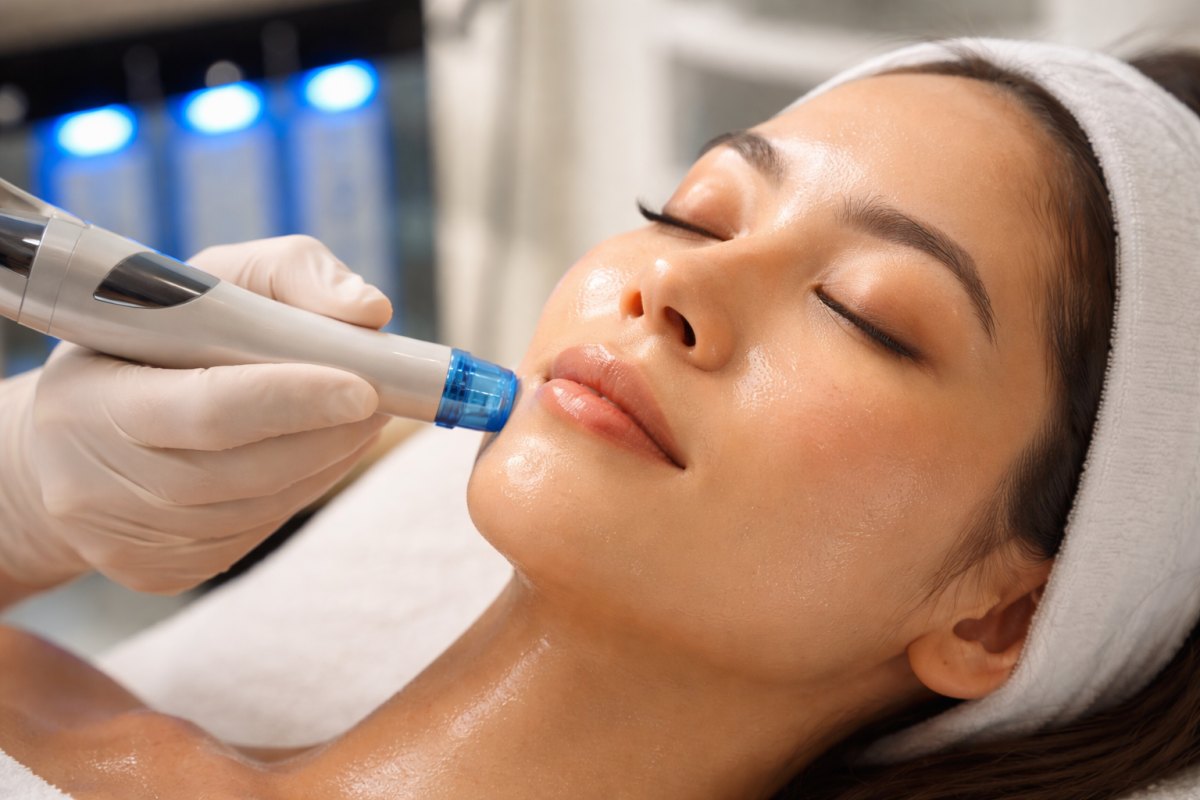
Bangkok skin often has to deal with several triggers at once. Heat and humidity may increase sweat and sebum, while urban pollution and fine dust can settle on the skin during commutes, outdoor errands, and everyday city life. When these factors combine, pores can appear congested and the face can look tired even if you are following a regular skincare routine.
Another common issue is dehydration. Many people assume sweaty skin is well-hydrated, but that is not always true. Skin can lose water while still feeling oily, especially if the routine relies heavily on harsh cleansers or frequent exfoliation without enough barrier support. This is one reason dehydrated skin treatment searches grow during Thailand’s hot months.
Air conditioning adds another layer. Office buildings, shopping malls, cars, and homes in Bangkok often stay cool for long periods, and that indoor dryness can leave the skin feeling tight by afternoon or evening. If your skin alternates between outdoor heat and indoor cold air, it may become sensitive, rough, or more prone to makeup patchiness.
Where Hydrafacial fits into hot-weather skincare
Hydrafacial is often chosen because it is designed to cleanse and refresh the skin without the heavy feel that some people dislike in hot weather. For clients researching hot weather skincare Thailand, the appeal is usually the same: remove buildup, smooth texture, and add hydration without a harsh or overly stripping experience.
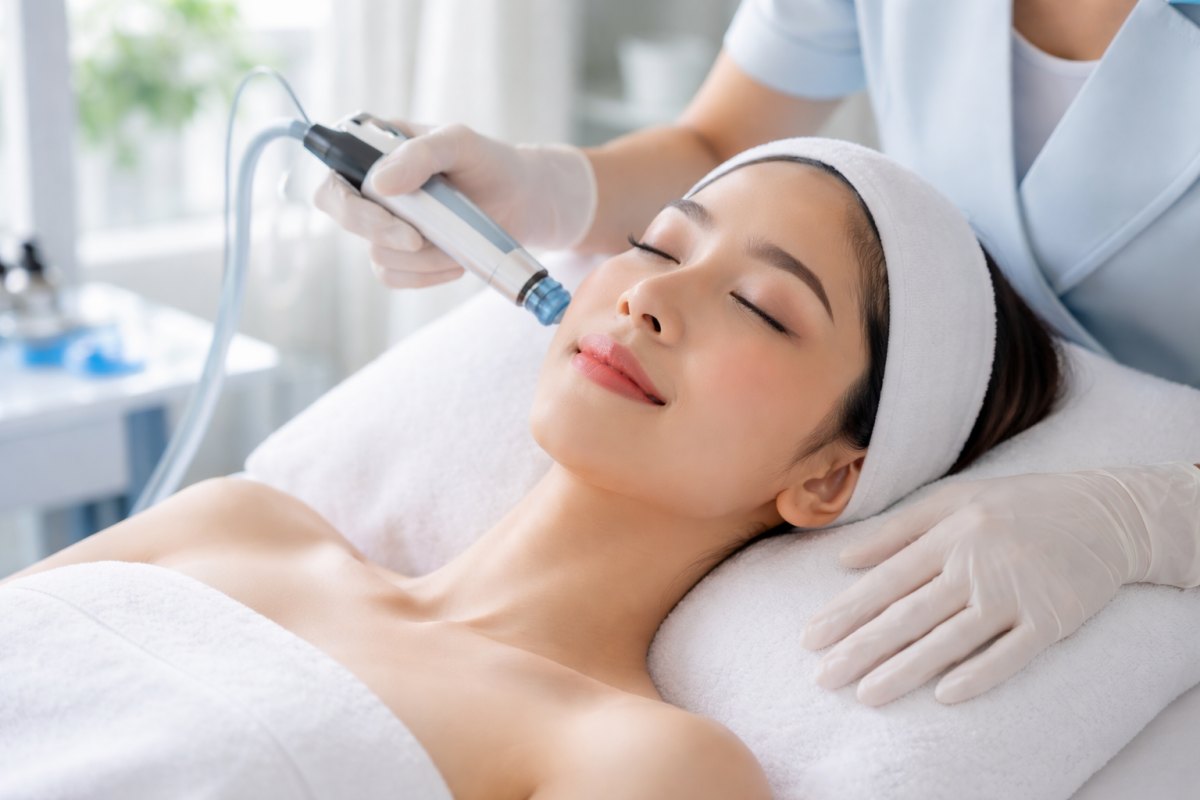
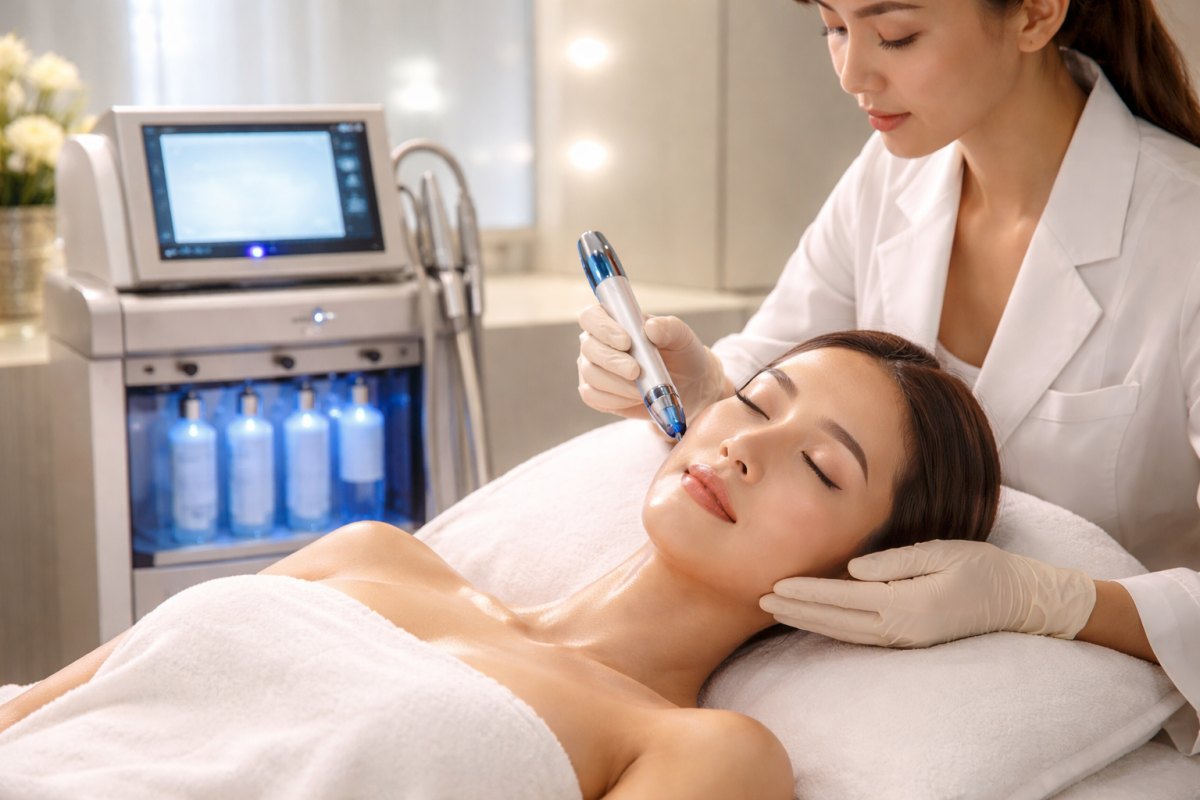
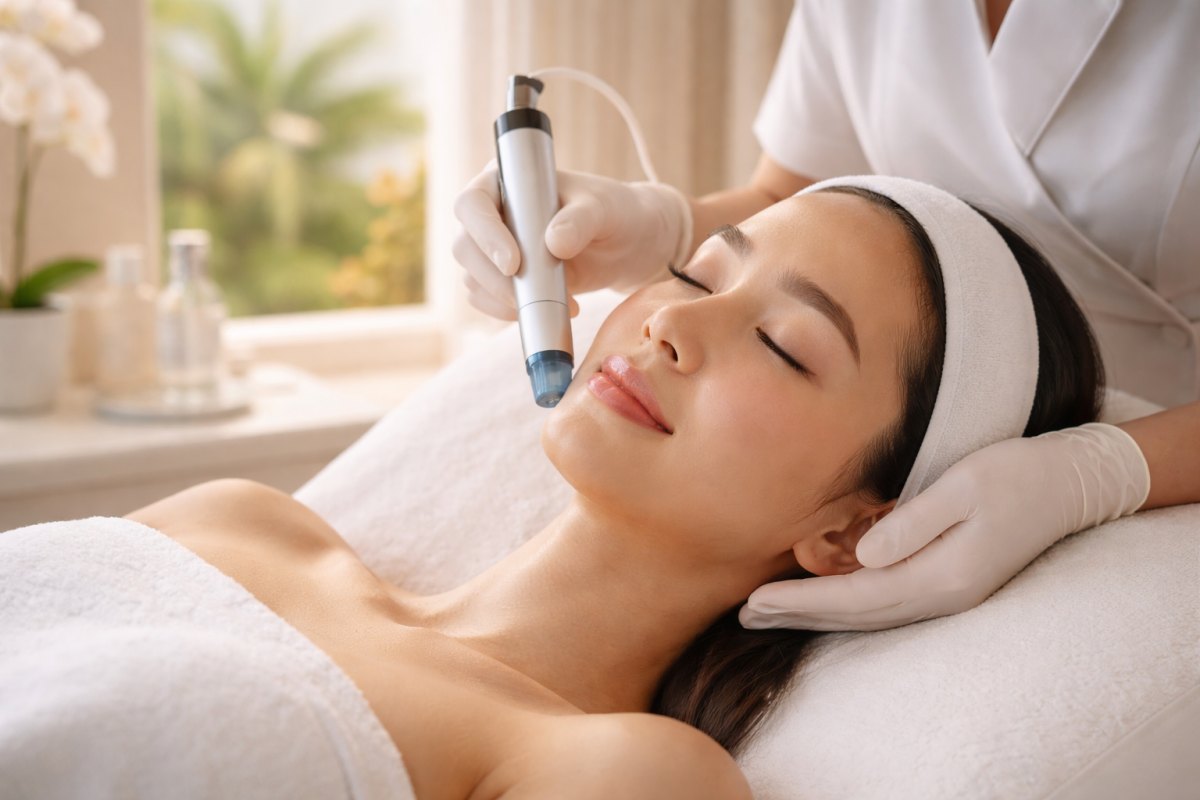
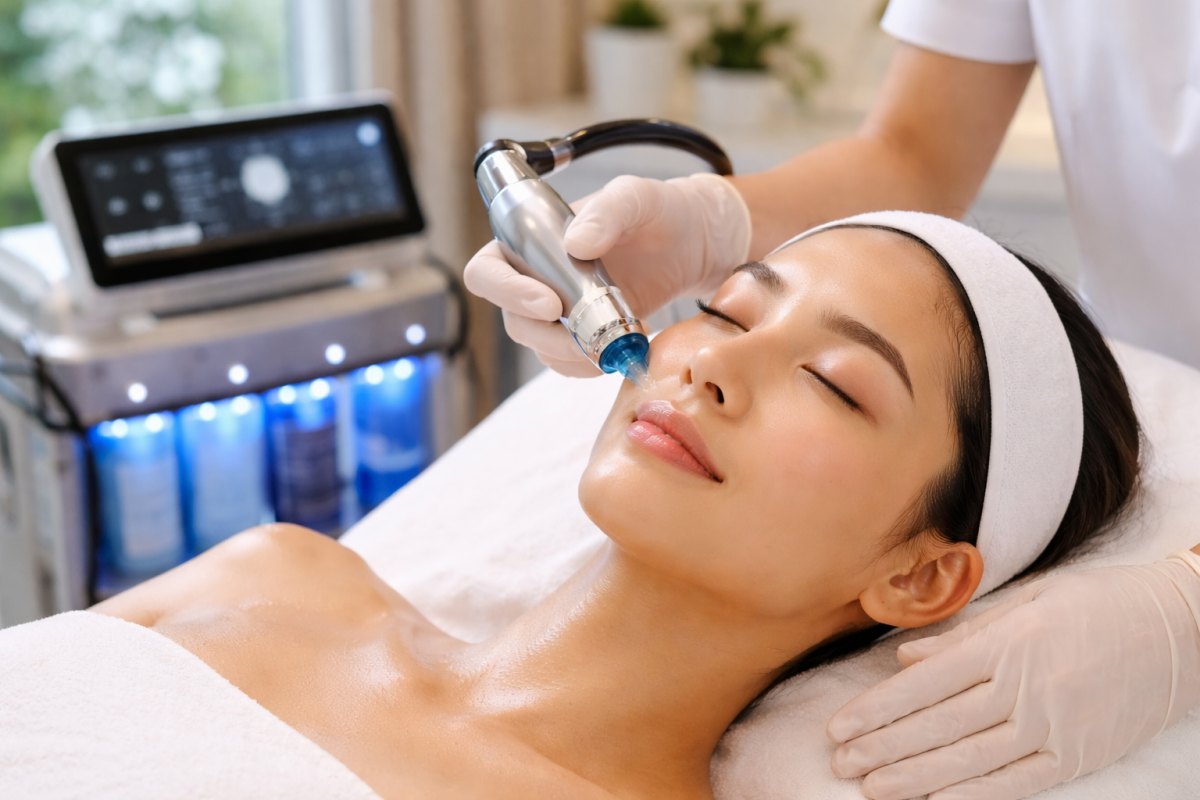
The treatment typically combines cleansing, exfoliation, suction-based extraction, and serum infusion. For skin affected by city pollution skincare concerns, that means it can help lift away surface debris and excess oil while supporting a cleaner-looking complexion. For dry-feeling skin, the hydration step is especially important because it helps the skin look more comfortable and less flat.
Hydrafacial is not a miracle solution, and it does not replace daily sunscreen, cleanser, or moisturizer. But for people who feel their skin gets stuck between oily and dehydrated during the hot season, it can be a useful reset.
Common skin concerns during the hot-to-rainy season transition
The period before the rainy season can be tricky. Days are still hot, sweat is common, and pollution levels can vary from one week to the next. This transition is when many people notice that their skin texture becomes less even and makeup does not sit as nicely as it did in cooler months.
Some of the most common concerns include congested pores Thailand readers often talk about, especially around the nose, chin, and forehead. Others include dullness from buildup of dead skin cells, and dehydration from repeated exposure to air conditioning. If the skin barrier is under stress, redness and sensitivity can also become more noticeable.
Hydrafacial Bangkok clients often ask whether the treatment is better suited to oily skin or dry skin. In reality, the treatment can be relevant to both when the issue is imbalance rather than a single skin type. Oily skin may need clearer pores and lighter-feeling hydration. Dry skin may need smoother exfoliation and moisture support. Combination skin may need both at the same time.
Who may consider Hydrafacial during Thailand’s hot season
Hydrafacial may be worth considering if your skin often looks tired by the end of the day, feels congested after commuting, or becomes dry and rough after hours in air-conditioned spaces. It may also be appealing if you want a treatment that fits into a busy Bangkok schedule and does not usually require extended downtime.
People who wear makeup daily often notice hot-season buildup more quickly, especially in the T-zone. Office workers may feel their skin is constantly shifting between heat outside and cold air inside. Frequent travelers, event attendees, and anyone preparing for a summer schedule in Thailand may also appreciate a treatment that focuses on skin clarity and hydration at the same time.
If you have active skin conditions, sensitive skin, or specific medical concerns, it is best to discuss your skin history with a qualified professional before booking. A reputable clinic can help decide whether Hydrafacial treatment is appropriate for your skin needs and timing.
When to book and how often to think about treatment
If you are trying to time treatment around Thailand’s weather, many people choose Hydrafacial before major events, before a trip, or as part of a seasonal skin refresh. Booking before the hottest stretch of the season can also be helpful if your skin tends to become congested or dull after several weeks of heat and commuting.
Some clients prefer a single session for a quick reset. Others like to schedule treatments more regularly to maintain a cleaner, smoother appearance through the season. The ideal frequency depends on your skin type, lifestyle, and goals. A provider can help you build a plan that matches your routine rather than forcing your skin into a one-size-fits-all schedule.
If you are comparing options, it can also help to look at the overall clinic environment, device quality, and provider experience. Choosing a trusted clinic matters just as much as the treatment itself.
Daily habits that support Hydrafacial results in Bangkok
A treatment works best when your daily routine supports it. In Bangkok, that usually means keeping sunscreen consistent, cleansing gently at night, and using a moisturizer that helps your skin feel comfortable in both hot weather and indoor air conditioning. If your skin is oily, lightweight hydration may be enough. If your skin feels tight, barrier support can make a noticeable difference.
Try not to over-exfoliate after a professional treatment. The goal is to keep skin smooth without stripping it. Hydration, sun protection, and a balanced routine usually matter more than adding too many active ingredients at once.
For people who spend a lot of time outdoors, hats, shade, and reapplication of sunscreen are especially important in Thailand. For people who spend most of the day in air-conditioned rooms, a good moisturizer and enough water intake can help skin feel less dry and reactive.
How to choose a clinic in Thailand
If you are looking for a provider, focus on clarity, professionalism, and realistic guidance. A good clinic should explain what the treatment does, who it is for, and what kind of results are realistic for your skin condition. It should also take the time to ask about your skincare routine, sensitivity, and recent sun exposure.
When searching for a Find a Hydrafacial provider in Thailand, consider whether the clinic feels clean, well-run, and transparent about aftercare. In a city like Bangkok, where there are many options, a careful consultation can make the difference between an ordinary facial appointment and a treatment plan that genuinely suits your season and skin.
The bottom line for hot-season skin in Thailand
Thailand’s hot season can leave skin feeling oily, dry, congested, and dull all at once. That is why Hydrafacial has become such a relevant option for people dealing with city life, air conditioning, and weather-related skin changes. It is not a cure-all, but it can be a practical way to refresh the skin when your usual routine stops feeling enough.
If your skin looks tired after commuting, feels tight after office hours, or becomes rough and congested as the weather warms up, a Hydrafacial treatment may be worth exploring. For many Bangkok clients, the appeal is simple: cleaner pores, smoother texture, and hydration support that fits the season.
To learn more about the treatment itself, start with Hydrafacial treatment. If you are ready to compare local options, the next step is finding a provider who understands Thailand’s climate and your skin goals.